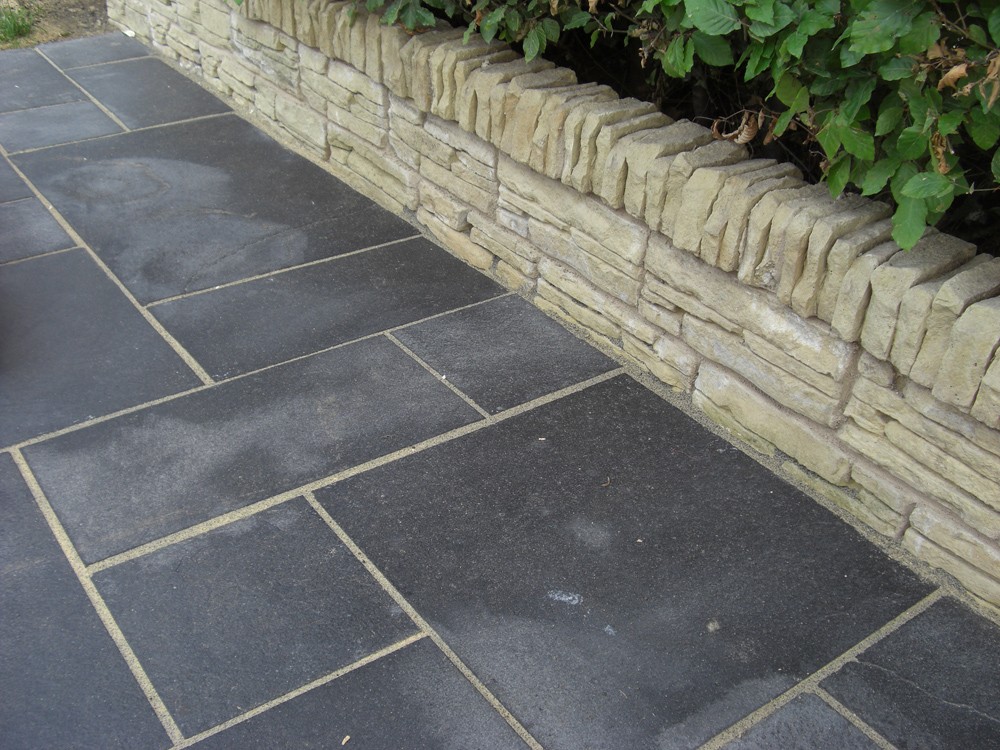
Showing posts with label Indian limestone exporter. Show all posts

Thursday, 21 June 2018

Why Are Indian Limestone Slabs Dominating The Limestone Market?


Good in looks and dependable in character, Limestone Slabs cannot be considered any less than any of the other stone slabs used in construction of buildings, commercial or residential. It is interesting to note here that Indian limestone slabs contribute to more than sixty-five per cent of the total limestone market.
The most wonderful part about these slabs is that they blend in any surroundings and can complete the look of modern as well as tradition designs. These slabs can be used on the floor or the wall and they have the ability to transform any place, especially when they are used with cemented blocks in sewage tanks, driveways and so many other places.
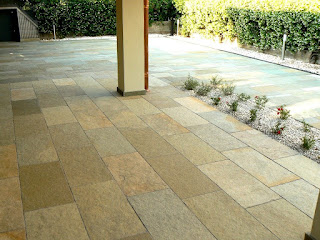
 http://www.elegantgranites.com/limestone-slabs.html

Limestone slab, being easy and not very expensive to maintain, is a preferred choice with many people, especially in the places with the problem of erosion due to harsh environmental conditions, where it may not be advisable to use marble as it may get spoilt. Moreover, you cannot doubt the choice of your predecessors who relied on the limestone and built the statues and buildings which have stood the test of time for more than 2000 years ago.
Having said that, there is no denying the fact that installation of limestone slabs can only be done by the professionals who are experienced in the field. Indian Limestone Slabs have proved their credibility as a construction material for internal and external designs. Historically they have shown longevity and sturdiness which keeps their popularity at the peak.


Limestone is formed from calcite and aragonite (different crystal forms of calcium carbonate). It is a sedimentary rock used mainly as a building material but it has many other uses apart from that. Like most other sedimentary rocks, most limestone is composed of grains and most of these grains are skeletal fragments of marine organisms such as coral or foraminifera.
Due to the impurities present in the form of clay, sand, iron oxide or organic remains, limestone may exhibit different colours. It may also be crystalline, clastic, and granular in texture. Also, Indian limestone slabs are porous, which happen due to rearrangements in the crystalline structures. They are easily cut and are not affected much by variations in temperature. Indian limestone slab is soft which requires little or no polishing and gives rough and earthy appearance. 

http://www.elegantgranites.com/limestone-slabs.html

Many landmarks in the world have put limestone to use even in the ancient civilization and societies. The reason for it being a preferred stone is its long-lasting quality which, despite so much of exposure to external factors, let it survive and remain as an iconic structure for a very long time.
We at Elegant Granites are the Wholesale Exporters of Indian limestone slabs which are preferred and liked all over the world as they are durable with long life. Their distinguished colours and incredible qualities with multiple uses make them a hot favourite. Be it sculpting, decorative pieces or commercial and residential purposes, this wonderful natural stone never disappoints.

Monday, 20 June 2016

Top 6 Factors that Govern the Price of Indian Limestone Slab

Limestone was the go-to stone material in the medieval period. Over the course of time, Indian limestone slabs have been pushed to oblivion by easily machined marbles and quartzite stones. But even today, Indian limestone slabs are equally preferred as countertops. Limestone is a light and sturdy building material in the natural stone category.

So, if you are looking for a countertop material made of stone, give limestone slabs a shot. From the pricing point of view, here are 6 factors that determine the range in the market.


   1. Limestone variety

One of the major factor that decides the quality of limestone countertops is its age and the location of mining. The pricing can vary.

They are classified as:

  • North Indian limestones
  • South Indian limestones
The two varieties are distinct by virtue of their colour and texture. The South Indian limestones are comparatively costlier than their counterpart.
   
   2. Age of the stone

Older the rock, higher will be its pricing. The older limestone slabs have encountered the abrasive forces of nature, and hence are likely to be more rigid and sturdy. Indian limestone slabs used to make countertops for kitchen are exclusively quarried from deposits that are at least 2 million years old.

    3. Colour of limestone

White limestone is costlier than the greys and the beige ones. Indian limestone slabs used in countertops are usually fader shades of cream and grey. Pure white slabs are hard to extract and maintain as far as cleanliness is concerned.


    4. Purity of the stones

Limestone is subjected to corrosion and exposure to impurities in the course of its formation into a solid stone. Indian limestone slabs used in kitchen countertops have a distinct presence of impurities that give them the kind of look all designers love.

The common impurities found in the slabs are:
  • Silica
  • Alumina
  • Iron
  • Phosphorus
  • Sulphur
  • Arsenic
  • Magnesium
  • Manganese
  • Fluorine
  • Moisture

The impurities are present in the form of oxides, hydroxides and crystalline structures which could lead to deformation of the limestone slab countertop if not checked for concentration in the beginning.

    5. Type of finish

Yes, finishing is a significant factor when limestones are put for installation. Depending on the kind of structure they are going to be cut into, the Indian limestones slabs feature the following finishes:
  • Polished
  • Honed
  • Bush-hammered
Polished surfaces are costlier than the other two on account of higher reflection quality and glossy surface. Moreover, they are protected by a coating of sealing to prevent staining from oil, dirt, fluids and fingerprints.

    6. The packaging

Overall pricing is decided on the basis of intricate art work, uniformity of shade and thickness of the limestone slabs. Thicker the slab, higher is the quoted price. Thicker slabs are preferred because of their superior structural balance.
Ideal for modular kitchen because of buff texture, Indian limestone countertops is a non-conventional alternative to richly coloured quartzite, slates and marble varieties.

Thursday, 17 March 2016

Top 6 Reasons that Makes Limestone a Classy Choice for Home

It goes without saying that flooring plays a vital role in homes and offices. It not only enhances the look, but also proves to be utilitarian. Now there are several material options for flooring today. However, limestone floors look elegant and marvelous. In fact, there are plenty of reasons for which you should choose this material for flooring. These are in use since centuries, and they are known for their durability and toughness. Moreover, you can even expect to get the perfect matte finish with these materials.

1    Important Things To Remember-

It is important to remember that limestone is a softer stone compared to marble. Hence, you will have to maintain it with proper care and caution so that the floor lasts for years.  

http://www.elegantgranites.com/limestone-tiles.html


2    Creating a vibrant setting-

Regardless of the nature of décor and settings in your home, limestone floor is the ideal option. It has the ability to transform a dull looking space into a vibrant and attractive space. In fact, you can be certain that the nature of the stone is such that it will always accentuate the look and feel of a room. Even if, the furniture and cabinets in your room are old, limestone floors will give you a good feeling.

3    A symbol of luxury-

The stone is a symbol of luxury and style because it comes with an elegant finish. You can find it in different variations of honed, polished, brushed, antiqued or polished to get different look and feel. Moreover, the floors can also be made into different designs, patterns and colors. Hence, you will love the floor.

4    Emphasis on proper care-

  
In the last few years, the popularity of using natural stones has increased tremendously. There are many domestic and commercial properties with limestone flooring, and hence, you should not be an exception to this. However, you need to give attention to proper care and maintenance. Lack of maintenance can result in the development of stains within a course of time.

5    Avoid using acid-

Top Indian Limestone Suppliers advises that you should avoid using acid on the stone because it is made of calcium carbonate. When it comes in contact with acid, the surface can become dull and rough. This is the reason why it is a wise idea to prevent using limestone in the kitchen. Accidental drop of acid on the floor should also be cleaned with water immediately.

6    Methods of care-

In order to ensure that the limestone floors are in the best shapes, you should try to use sealants every year. Seek the help of professionals in order to get this done. Using the right sealant is essential because it will block the pores where moisture is trapped. In addition to that, it is also crucial to use warm waters while cleaning the floors.

If you want, you can use the stone in the stairways and fireplaces in order to enhance the overall elegance and individuality to any design. Moreover, you can even out it in the garden or terrace area for an added warmth and shine.