Showing posts with label Indian sandstone tiles. Show all posts

Wednesday, 2 May 2018

Why Are Indian Sandstone Slabs The Best Choice?

Sandstone has been used for domestic construction since pre-historic times. It is composed of quartz and feldspar and it is a preferred stone due to its incredible properties. It is formed from cemented grains of silica and calcium carbonate. Its softness makes it easy to carve and mould. Its wide use for constructing temples, homes and other buildings has been there since ancient times. It has also been used to create decorative material like fountain and many statues have also been carved with this amazing stone.
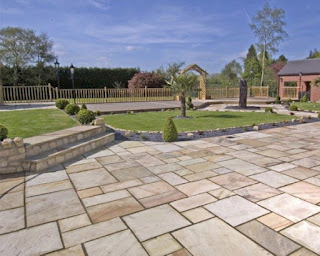

http://www.elegantgranites.com/sandstone-slabs.html

Sandstones are found in tan, brown, yellow, red, grey, pink, white and black. It is a clastic sedimentary rock composed of sand-size grains. These grains are composed of minerals, rock or organic materials. Mineral grains in sandstones are usually quartz. Sandstone can be used to make countertops, decorative pieces or could be the part of interior decoration. It is called a building stone as it is a durable and long lasting. It has proved to be used in exterior as well as interior of any building.
Indian Sandstone Slabs can stand gracefully in its natural form without polishing because its natural look is aesthetically more attractive. Sandstone has proved to be the best landscaping material, giving a rustic impression with a contemporary style, blending this unique combination into a unique whole. Sandstone being the most common stone is found everywhere; one of the reason of its popularity. India too has its deposits of sandstone in the form of Kota Sandstone, which has become the most frequently used resource in recent years.


Sandstone Slabs are best used for paving, flooring and landscaping. They are chosen for the purpose due to their sturdiness, porosity and resistance to tough climatic conditions. These slabs are a favourite choice with architects, contractors, interior decorators and homeowners. Their durability has won many hearts and it can be patterned into a traditional or a contemporary design. 

Elegant Granite is a leading stones manufacturer, supplier and exporter of natural stones like marble, sandstone, quartzite and limestone. We are ISO 9001 2000 certified company. Our floorings, slabs, paintings, sculptures stand apart in array of colours enhancing the beauty of the place. Quality and affordability is our motto and we never compromise on either of them. That is why, all our products pass through rigorous checks. We take all the precautions to deliver the products undamaged and on time to our clients. We have outlets at various locations to help you choose from the extensive variety offered by us.
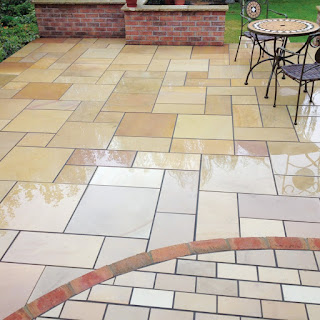

http://www.elegantgranites.com/sandstone-slabs.html


Our innovative and creative designs in stones are unmatched. No wonder, we have earned the respect in India and abroad. Our commitment and hard work has established a relationship of trust with the clients since we always keep the client’s interests, choice, taste and preference as priority. That is why our products are customised according to what the client demands.

Our sandstone slabs are used and admired for their elegant looks when used in the flooring of interiors or exteriors. Their non-slippery and long lasting nature makes them an ideal choice.

Friday, 18 December 2015

How cleaning of natural marble and slate stone is done

Restoring Indian marble and slate stone is a thriving business. Despite top quality finish and post-sales services, many buyers are making a beeline to the cleaning and restoration experts to take care of minor issues. Marble and slate stone require an elaborate cleaning and restoration regime to give them the “unblemished natural” look. Regular cleaning won’t be enough in most cases, especially if you are living in an urban city area or bay area. Pollution, dirt, dust and footfalls take a toll on the surface appearance. For a highly reflective surface, Indian slate stone slabs and marble exporters recommend polishing and sealant application to prolong the glossy finish.

How cleaning of natural marble and slate stone is done?
 

Cleaning of natural Indian stones involves 3 distinct processes. They are:

-    Blow dry cleaning
-    Misting
-    Polishing using abrasive chemicals/ machining

Before polishing and restoring of the natural stones, cleaning the corners and pockets is necessary. Any invasive dust particle will tear the sealant apart and lead to further damage.

Shining marble floors

If the marble floor you installed last year has already begun to lose its sheen, it requires a radian polishing powder application. It is the cheapest and smartest way to retain the glossy finish that the Indian marble manufacturers are known to deal in. Minor scratches, stains and cracks are camouflaged using a mix of buffing and polishing procedure, which takes less than 45 minutes.

Slate stone cleaning and sealing 
 

Indian slate stone is a popular natural building material used for roofing and flooring applications. The durability of Indian slates is known all round the world and are available in multiple varieties. Cheaper versions have made it to the market, but the commanding position that slates hold remains unchallenged. So, how to retain the appeal over the surface even years after its installation?

Points to be noted

o    High gloss stone sealers are available in the market that provides the surface with a superlative shine and long-lasting protection. These water-based polishes are non-volatile in nature and have mild fragrance.

o    Indian marbles and slates are susceptible to oil and grease stains. The application of the sealers comes handy if you have installed natural stone in areas like kitchen, bathroom, store room and bar. Here is how you restore the natural stone.

o    Close the doors and windows while applying the sealers.

o    Avoid contact with water, oil, sunlight and any impurity.

o    Remove the sealant coating already existing over the surface. Only expert installation personnel know how to scrub and re-touch the surface.

o    Apply the sealers every 18 month to restore the sheen.

o    Don’t use restoration techniques for glazed and non-absorbing surfaces like woods and decks.

Experts recommend the use of water-based mildly acidic floor detergents. They are clear in nature and have non-staining interaction with the slate surface. Regularly wiping the surface with detergents can yellow it and cause staining along the edges. Use of 0.01 inch sealant cover is the most preferred way to keep the Indian slates young and shiny for decades to come.

Wednesday, 23 September 2015

Understanding The Concept Of Sandstone Weathering In Ancient Historic Buildings

Sandstone is a typical example of sedimentary rock, which is clastic in nature. Sometimes sandstones are also known as Arenite. Almost all of the sandstones are composed of either feldspar or quartz since they are the most abundant minerals on earth. The use of sandstone has been known to man since the historic times. Sandstone has been used since the ancient ages for domestic construction of house wares.  It is still used for the same purposes; however, the methods have been quite improved because of the advancement in technologies. 

Reason for sandstone’s popularity as a building material

Sandstone is an instant hit among the construction workers as a building material because of the primary reason that it is simple to work upon and carve, since it is a relatively softer stone when compared to the other stones. Even though sandstones are on the relatively softer side, yet they can withstand weathering largely, thereby making them a good choice as building materials.

Indian Sandstone has been used extensively in constructing many ancient structures like temples, residential units as well as other buildings. The quality of sandstone supplied by Indian Sandstone supplier has also been part of aesthetic piece of works as well like statues, ornamental fountains and many more.  Since it is greatly resistant to weathering, extensive use of the stone has been found in paving as well. It has been found that the stone is also used grindstones for sharpening objects because of their uniform grain size and of their friable structure.

Occurrences of sandstone weathering in ancient buildings


It is a common knowledge that materials deteriorate over time by the process of weathering. Even though sandstone is resistant to weathering largely yet it is vulnerable to the perils of time. Weathering in sandstone is noticed in many ancient structures like Petra of Jordan, Machu Pichu of Peru, Coliseum of Rome and many more.  The reasons of the decline can be broadly divided into two basic parts:

·       Natural: The natural factors in weathering of the stone have to consider many aspects like intrinsic and extrinsic influences. While the intrinsic influences include factors that are inherent to the stone like molecular composition, hardness as well as fracturing, the extrinsic one constitutes the external influences that are induced by natural causes like abrasion, moisture and temperature.


·          Fabricated: The main cause that leads to fabricated weathering in the stone is human induced abrasion. The visitors who tend to visit the stone structures by touching, walking and climbing them are the primary reasons for their decay. Moreover, many of the individuals often scratch out their names upon these structures thereby making the structures more vulnerable to weathering and eventual decay. Such human influences can take a heavy toll on the cultural and historic heritage of the buildings where they visit.

The study of stone weathering therefore requires some other knowledge as well like climatology and weather studies, mineralogy, architectural history of the building along with the construction techniques that has been used and the land use on both local as well as regional level.